Nonstick cookware has been a staple in kitchens for decades, making cooking and cleaning easier. However, the convenience of Teflon-coated pans comes with hidden risks that many consumers are unaware of. If you’re still using traditional nonstick pans, you may want to reconsider. Here’s why Teflon could be harming your health and what to consider when switching cookware.
When it comes to nourishing our bodies and caring for our homes, the little things matter — right down to the cookware we use daily. At Abide and Thrive, we believe stewarding our health is part of honoring the temple God has given us, just as it says in 1 Corinthians 6:19,
“Do you not know that your bodies are temples of the Holy Spirit, who is in you, whom you have received from God? You are not your own.”
That’s why we take a closer look at everyday choices — including the hidden dangers of Teflon cookware.
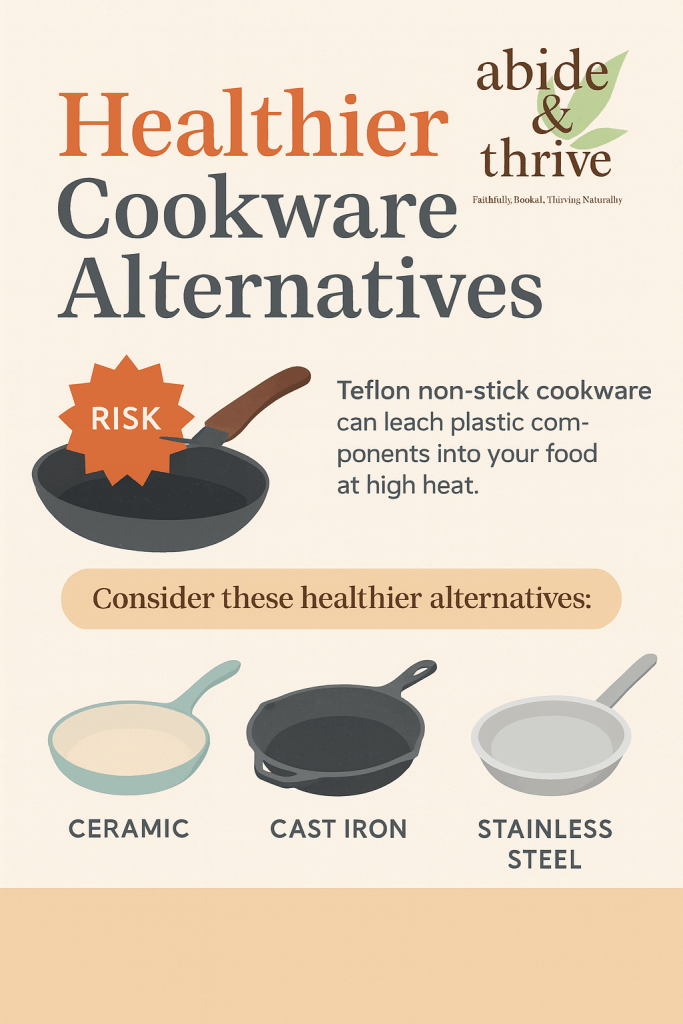
Teflon, also known as PTFE, has been popular for decades thanks to its non-stick convenience. But studies have raised concerns about chemicals like PFOA, used in older Teflon products, and how high heat can cause these coatings to break down, potentially releasing harmful fumes or particles.
The Hidden Dangers of Teflon
1. Toxic Fumes at High Temperatures
Teflon is made from a synthetic chemical called polytetrafluoroethylene (PTFE). While PTFE itself is stable at low temperatures, when heated above 500°F (260°C), it begins to break down, releasing toxic fumes. These fumes contain perfluorooctanoic acid (PFOA) and other harmful chemicals that can lead to “Teflon flu” in humans—causing symptoms like headaches, chills, and fever. Worse, they can be fatal to pet birds, which are extremely sensitive to airborne toxins.
2. Linked to Serious Health Issues
The primary concern with Teflon cookware is its association with per- and polyfluoroalkyl substances (PFAS)—a group of “forever chemicals” that have been linked to:
• Hormonal disruptions
• Liver damage
• Thyroid disease
• Reduced fertility
• Increased cancer risk
Studies have found that prolonged exposure to these chemicals, especially from scratched or deteriorating nonstick pans, can lead to accumulation in the body and long-term health consequences. If that is not enough to just end the discussion here… Although honestly, I only threw my non-stick out when it had scratches- because that to me made it real- not only did I know in my mind that is was bad from the research, now it was real- the scratch was there, and the toxins were visibly leaving the pan and entering my food.
3. Environmental Impact
Teflon and other PFAS chemicals pose risks to human health, but they also persist in the environment for decades. It does not end with us. If taking care of the world for your children is a value for you, then know that these chemicals contaminate water sources, wildlife, and even our future food supply.
Even though most modern Teflon pans are marketed as “PFOA-free,” many health-conscious families are still choosing safer alternatives — and for good reason.
I’ll be honest — it took me a while to transition away from our Teflon pans. My husband loves non-stick cooking, especially when he’s in a rush and doesn’t want to deal with food sticking to the pan. I completely understand that struggle — it’s one of the reasons we held onto our Teflon longer than I wanted to. But once we started learning more about the potential risks, I knew we had to make a change — even if it meant adjusting our cooking routine.
There are so many great alternatives to Teflon, but I have to say — my personal favorite is stainless steel. It’s what I use most in our kitchen, and I love how durable, long-lasting, and completely free from questionable coatings it is. That being said, it does take a little patience to use properly. You need to preheat the pan and coat it with butter or healthy oil, otherwise food will stick — no getting around that.
My husband is still getting used to the switch. He’s more of a “quick cook” — throw it in the pan, get it done — so waiting for the pan to heat just isn’t his favorite thing. But once you get the hang of it, stainless steel gives amazing results, and I love knowing we’ve eliminated those toxic coatings from our home.
If you’re looking to make the switch too, here are a few healthier cookware alternatives that align with clean living and intentional stewardship.
Other Safer Alternatives to Teflon Cookware
Cast Iron Cookware
Known for its durability and natural non-stick ability when seasoned properly, cast iron is a favorite for those who want long-lasting, chemical-free cookware. It holds heat well, making it perfect for searing meats, sautéing veggies, or baking cornbread. It can also add trace amounts of iron to your meals — beneficial for many but not ideal for everyone, especially those with iron sensitivity.
We recommend Lodge Cast Iron, which you can conveniently find through Amazon — a reliable source for toxin-free, affordable cast iron.
Enameled Cast Iron
For those who love cast iron but want something lower maintenance, enameled cast iron is a wonderful option. The enamel coating prevents rust and removes the need for seasoning, while still offering excellent heat retention. It’s also safe for acidic dishes like tomato sauce, which plain cast iron can react with.
Stainless Steel Cookware
As I mentioned earlier, stainless steel is my personal go-to. It’s incredibly durable, non-reactive, and completely free from chemical coatings. We love Made In Cookware, a brand known for professional-grade stainless steel with a strong commitment to quality and health-conscious cooking. You can check them out here.
It does take practice — preheat your pan, use healthy fats, and embrace the learning curve — but it’s worth it for peace of mind and great cooking results.
Ceramic Cookware
Ceramic cookware is a naturally non-stick option free from PTFE, PFOA, and other questionable coatings. It’s easy to clean, safer for your family, and comes in beautiful, modern designs.
We love Caraway Home, known for their gorgeous ceramic sets and commitment to toxin-free materials. You can browse their latest cookware here.
Glass Cookware
Glass bakeware, such as casserole dishes or measuring cups, is completely inert, meaning it won’t leach chemicals into your food. Though it’s primarily used for baking and storage, stovetop-safe glass options (like kettles) are available for those wanting to keep their kitchen toxin-free.
Stoneware and 100% Ceramic
Fully ceramic or stoneware cookware is another excellent alternative. We recommend Xtrema, known for their 100% ceramic, non-toxic cookware — perfect for baking, stovetop use, and even oven-to-table meals. Explore their cookware here.
Final Thoughts: Our Family’s Journey Toward Healthier Cookware
Choosing the right cookware is more than just a kitchen upgrade — it’s a reflection of your values, health priorities, and stewardship of God’s blessings. I won’t pretend it was easy for us — switching from Teflon was definitely a process, especially convincing my husband to say goodbye to his beloved non-stick pans! But once we made the commitment, it felt so good knowing our home was a little healthier and more aligned with how God designed us to live — with care, intention, and awareness.
Whether you’re swapping Teflon for ceramic, experimenting with cast iron, or (like me) learning the rhythm of stainless steel cooking, every step matters. It’s all about progress, not perfection.
We love recommending trusted, non-toxic brands like Our Place, aligned with our mission to support vibrant health, natural living, and faith-filled stewardship.
Your kitchen should be a place of nourishment and peace, not hidden health hazards. By educating ourselves and making intentional swaps, we honor our bodies, our families, and the beautiful creation God designed for our good.
 abide & thrive