

Treasures of the Purple Berry Bush
God’s creation is full of surprises. Sometimes the most ordinary walk in the woods can reveal a plant so striking, it stops you in your tracks. The American Beautyberry (Callicarpa americana) is one of those treasures. With its radiant clusters of purple berries wrapped tightly around green stems, it’s impossible to miss. But beauty is only part of the story. This humble shrub has been used for centuries as food, natural protection against mosquitoes, and even in traditional remedies.
In this post, we’ll explore how to identify beautyberry, its many practical uses, a recipe for jam, and why this plant is a reminder of God’s provision in the wild.
What is American Beautyberry?
The American Beautyberry is a deciduous shrub native to the southeastern United States. Beloved for its striking appearance, it also plays an important role in ecosystems as a food source for wildlife. Humans, too, have found it useful — from natural insect repellent to culinary creations.

Key Facts:
Scientific Name: Callicarpa americana Native Range: Southeastern U.S. (Florida, Georgia, Texas, and beyond) Bloom & Berry
Season: Flowers in summer; berries form in late summer to fall
Habitat: Wooded areas, woodland edges, fields, and shaded trails
How to Identify Beautyberry
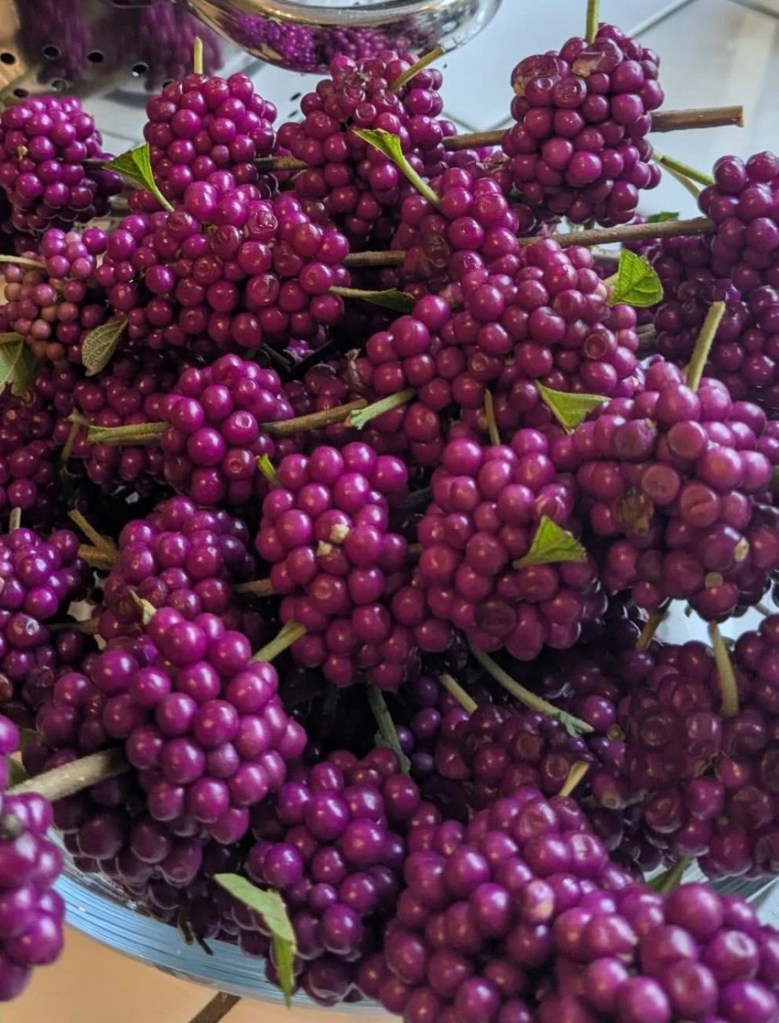
Berries: Vibrant clusters of shiny, violet-purple berries that wrap around the stem in tight circles
Leaves: Light green, oval-shaped, slightly rough to the touch, with serrated edges
Height: Typically 3–6 feet tall, sometimes larger in ideal growing conditions
Flowers: Small, pink-lavender blooms appear in summer before the berries
📍 Where to Look: Beautyberry thrives in partial shade and is often found along the edges of woods, near trails, or in open understory.
A Natural Mosquito Repellent
For generations, people in the South knew that crushed beautyberry leaves keep mosquitoes at bay.
How to Use: Crush fresh leaves until aromatic oils release. Rub directly on skin and clothing. Reapply as needed when outdoors.
Why It Works: Compounds in the leaves — particularly callicarpenal — repel mosquitoes, ticks, and biting flies. USDA research has confirmed its effectiveness as a natural alternative to chemical sprays.
Tip: When hiking or gardening, keep a few sprigs in your pocket.
Beautyberry Jam Recipe
These bright purple berries aren’t just for show — they can be turned into a unique, slightly earthy jam that pairs wonderfully with biscuits, toast, or yogurt.
Ingredients
4 cups ripe beautyberries (washed, stems removed) 2 cups water 3 cups sugar 2 tbsp lemon juice 1 package powdered pectin (1.75 oz)
Instructions
Simmer berries in 2 cups water for 20 minutes. Strain juice; discard pulp. Return juice to pot with sugar, lemon juice, and pectin. Bring to a rolling boil for 1–2 minutes. Pour into sterilized jars and seal.
Other Uses of Beautyberry
Wildlife Food: Birds (like mockingbirds and cardinals), deer, and small mammals feast on the berries Ornamental Landscaping: Plant in your yard for vibrant fall color and wildlife support Traditional Remedies: Native Americans historically used roots and berries for fevers and other ailments
(Disclaimer: For educational purposes only. Not intended as medical advice.)
Beauty and Function
The beautyberry is a stunning reminder that God creates with both beauty and function. What looks like just another wild shrub turns out to provide nourishment, natural protection, and joy.
“How many are your works, LORD! In wisdom you made them all; the earth is full of your creatures.” – Psalm 104:24
When we pause long enough to notice, we see that God has placed blessings in the most unexpected corners of creation.
Selah Moments
The next time you’re walking in the woods and see those brilliant purple clusters, pause for a “Selah moment.” Admire God’s artistry, then remember — this plant isn’t just beautiful. It’s functional, protective, and nourishing. From homemade jam to mosquito repellent, the American Beautyberry is a true blessing hidden in plain sight.
Want more faith-centered natural living tips and recipes?
 abide & thrive