
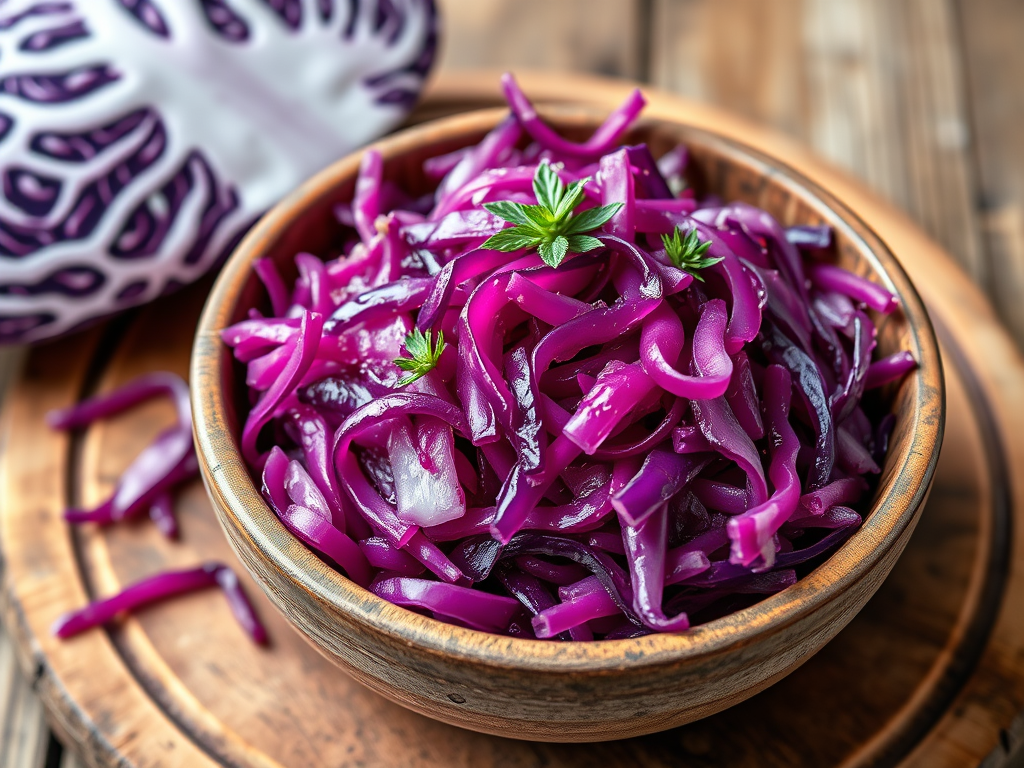
Sauerkraut, a traditional food made from fermented cabbage, offers numerous health benefits due to its natural fermentation process. Here’s why you should consider incorporating sauerkraut into your diet and how to make it at home:
Health Benefits of Sauerkraut:
- Rich in Vitamins and Minerals: Sauerkraut is an excellent source of vitamin C and K, as well as minerals like iron, calcium, and magnesium. These nutrients are essential for boosting immunity, supporting bone health, and aiding in blood clotting and wound healing.
- High in Fiber: The fermentation process in sauerkraut increases its fiber content, which promotes regular bowel movements and supports a healthy gut microbiome.
- Probiotic Powerhouse: Fermented foods like sauerkraut contain live probiotic cultures, which help maintain a balanced gut microbiome. A healthy gut is linked to improved digestion, stronger immunity, and even mental health.
- Enhanced Nutrient Absorption: The fermentation process in sauerkraut breaks down some of the cabbage’s cell walls, making it easier for your body to absorb its nutrients.
- Antioxidant Properties: Sauerkraut is rich in antioxidants, which help protect your cells from damage caused by harmful molecules called free radicals.
How to Make Sauerkraut at Home:
Ingredients:
- 1 large head of cabbage
- 1-2 tablespoons of unrefined sea salt or Himalayan salt
- 2 tablespoons of whey (optional, for enhanced fermentation)
- Filtered water (if needed)
Equipment:
- Large mixing bowl
- Large glass jar (such as a Mason jar) with a tight-fitting lid
- A clean weight to press down the cabbage (e.g., a smaller jar filled with water or a zip-top bag filled with water)
Instructions:
- Prepare the Cabbage: Remove any damaged outer leaves from the cabbage and discard them. Quarter the cabbage and remove the core. Thinly slice the cabbage and place it in the large mixing bowl.
- Salt the Cabbage: Sprinkle the salt over the cabbage slices and massage it in with your hands for about 10 minutes. The cabbage will begin to soften and release its juices.
- Add Whey (Optional): If using, pour the whey over the cabbage and mix well.
- Pack the Jar: Tightly pack the salted cabbage into the glass jar, pressing down firmly to release more juices. Leave about 1-2 inches of headspace at the top of the jar.
- Add Water (if needed): If the cabbage is not fully submerged in its own liquid, add filtered water to cover it completely.
- Weigh Down: Place a clean weight on top of the cabbage to keep it submerged in the liquid as it ferments. This prevents mold from forming on the surface.
- Ferment: Cover the jar with a clean cloth or coffee filter, secured with a rubber band. Allow the sauerkraut to ferment at room temperature (ideally between 65-75°F or 18-24°C) for at least 5 days, or until the desired level of tanginess is achieved. You may notice bubbles forming as carbon dioxide is released during fermentation.
- Check for Scum: As the sauerkraut ferments, you may see a thin layer of scum form on the surface. This is perfectly normal and can be skimmed off and discarded.
- Store: Once fermented to your liking, remove the weight and close the jar with an airtight lid. Store the sauerkraut in the refrigerator to slow down the fermentation process and extend its shelf life. It should keep for several weeks to a few months.
Enjoy your homemade sauerkraut as a side dish, in sandwiches, or as a topping for various meals. Its tangy flavor and numerous health benefits make it a valuable addition to any diet.
 abide & thrive