“Do you not know that your bodies are temples of the Holy Spirit, who is in you, whom you have received from God? You are not your own; you were bought at a price. Therefore honor God with your bodies.” – 1 Corinthians 6:19-20
As believers, we’re called to be faithful stewards of everything God has entrusted to us—including our physical bodies. Yet there’s a hidden threat that’s infiltrating our homes, our food, and even our bodies without our knowledge: microplastics.
In a recent video featuring Kim Cook from the Environmental Working Group (EWG), a sobering reality is revealed: these tiny plastic particles are now being found in unborn babies. This isn’t just an environmental issue—it’s a stewardship issue that demands our attention and action.
What Are Microplastics?
Microplastics are tiny plastic particles, often invisible to the naked eye, that have broken down from larger plastic products or been intentionally manufactured at microscopic sizes. Scientists have discovered these particles everywhere—in our oceans, our air, our drinking water, and alarmingly, in our bodies and the bodies of our children, even before birth.
Research shows that the average person may consume the equivalent of a credit card’s worth of plastic every week. These particles can carry toxic chemicals, disrupt our hormones, and potentially contribute to inflammation and chronic disease.
Biblical Stewardship Meets Modern Science
When we read Genesis 1:27—“So God created mankind in his own image”—we’re reminded of the sacred nature of our physical bodies. We are fearfully and wonderfully made (Psalm 139:14), designed with intricate systems that work in harmony. Honoring this divine design means being intentional about what we allow into our bodies and our homes.
Being a good steward in the 21st century requires wisdom and discernment. Just as Daniel chose not to defile himself with the king’s food (Daniel 1:8), we too can make choices that honor the bodies God has given us.
Managing High-Risk Foods: Wisdom Over Fear
According to recent research, certain foods have higher concentrations of microplastics. However, biblical stewardship isn’t about living in fear or restriction; it’s about making wiser choices with the resources we have.
The following visual guide highlights foods that typically carry higher risks, but keep reading below for how to safely enjoy your favorites.
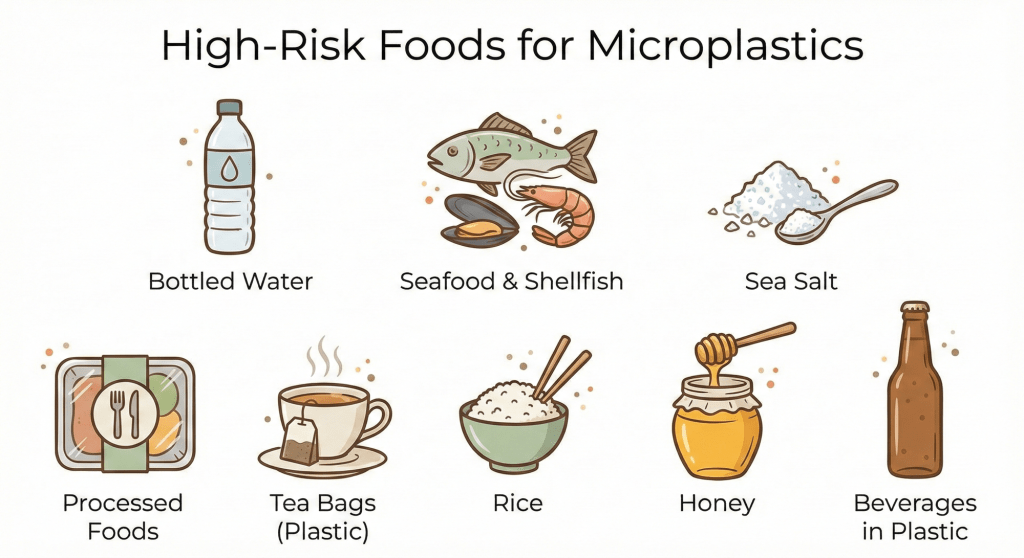
Common High-Risk Items:
* Bottled water
* Shellfish and seafood
* Sea salt
* Tea bags
* Pre-packaged processed foods
* Rice and Honey
Faith Over Fear: How to Keep Your Favorites Safely
It is completely understandable to want to keep staples like fish and honey in your diet. Honey is often used in scripture as a metaphor for goodness, and fish was a staple of Jesus’s ministry. You don’t have to banish these God-given foods from your table. Instead, use this “Swap, Don’t Stop” guide to enjoy them with peace of mind.
1. Honey: The Vessel Matters More Than the Bee
Honey is often listed as a risk, but research indicates that much of the contamination comes from plastic packaging and industrial processing.
* The Swap: Choose Glass & Go Local.
* Why: Most grocery store honey comes in plastic “bears” that can leach chemicals over time. Local, raw honey in glass jars bypasses the high-pressure plastic filtration systems used in industrial honey.
* Faithful Tip: Proverbs 24:13 says, “Eat honey, my son, for it is good.” Enjoy it, but look for the golden jar from a local beekeeper rather than the plastic bear on the supermarket shelf.
2. Fish: Choose the Fillet, Skip the Shell
Microplastics accumulate most heavily in the digestive tracts of marine life. This makes shellfish (mussels, oysters, shrimp) higher risk because we often eat the entire animal.
* The Swap: Prioritize Fillets & Rinse Thoroughly.
* Why: When you eat larger fish (like salmon, grouper, or snapper), you are eating muscle tissue, avoiding the gut where plastics accumulate. Always rinse fillets under cold water before cooking to remove surface particles.
* The “Safe Catch”: Focus on wild-caught fish fillets rather than bottom-feeding shellfish.
3. Rice: The Power of Washing
Rice can absorb plastics from soil and water, but you can significantly reduce this load in your own kitchen.
* The Swap: Rinse Until Clear.
* Why: Research shows that thoroughly washing rice (rinsing 3-4 times until the water runs clear) can reduce microplastic contamination by up to 40%. It’s a simple, 30-second habit that makes a difference.
4. Salt: Look to the Earth, Not the Sea
Sea salt is made by evaporating ocean water, which is unfortunately full of microplastics.
* The Swap: Mined Ancient Salts.
* Why: Switch to Himalayan pink salt or Redmond Real Salt. These deposits were formed long before plastic existed, making them a much cleaner option for seasoning your family’s meals.
Lifestyle Changes: Protecting Your Home
Beyond food choices, we can honor our bodies by making intentional changes throughout our homes.
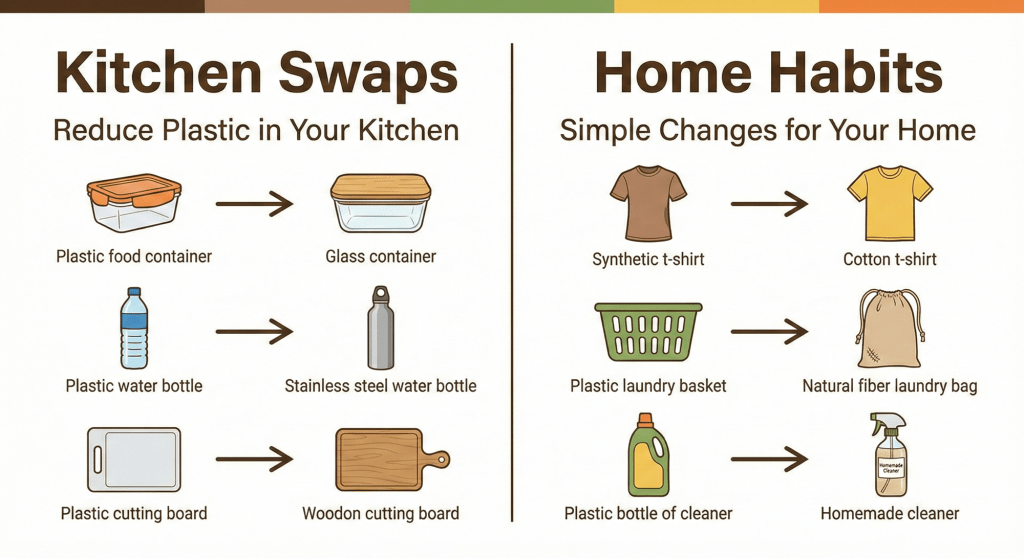
In the Kitchen:
* Switch to glass or stainless steel containers for food storage instead of plastic.
* Use glass or stainless steel water bottles and avoid single-use plastic bottles.
* Choose loose-leaf tea or tea bags specifically labeled as plastic-free.
* Select wooden or bamboo cutting boards instead of plastic.
Throughout Your Home:
* Replace synthetic clothing when possible: Polyester sheds microfibers. Choose cotton, linen, wool, and bamboo.
* Be mindful of dust: Household dust contains microplastics; vacuum regularly with a HEPA filter.
* For Parents: Choose glass baby bottles and wooden or natural rubber toys to protect the most vulnerable.
Walking in Freedom and Wisdom
“So whether you eat or drink or whatever you do, do it all for the glory of God.” – 1 Corinthians 10:31
Living with an awareness of microplastics isn’t about legalism or anxiety—it’s about informed stewardship. We can rest in God’s sovereignty while also exercising the wisdom He’s given us to make better choices.
Your body is a gift. Your family’s health is precious. And the knowledge we now have is an opportunity to walk more intentionally in the light.
What step will you take this week? Will you swap your salt, switch your honey jar, or invest in a water filter?
At Abide and Thrive, we believe that honoring God includes caring for the bodies He’s given us. We’re committed to providing you with research-backed, faith-integrated resources to help you and your family thrive physically, emotionally, and spiritually.
Sources & Further Reading:
* Environmental Working Group (EWG) – http://www.ewg.org
* Ocean Conservancy – Research on microplastics in seafood
* Studies on microplastics in drinking water (WHO, Orb Media)
* Research on plastic particles in food packaging and processing
 abide & thrive