
If you have ever boarded a plane and noticed a strong “clean” or chemical smell, you are not imagining it. Most commercial airlines treat aircraft interiors between flights using industrial disinfectants designed for speed and sanitation. While these products are approved for use, many travelers are unaware of what is being used or how it may affect the body, especially children, pregnant women, and those pursuing a lower-toxic lifestyle.
Understanding what is commonly sprayed inside airplanes allows families to travel with wisdom, not fear, and to make thoughtful choices that support health and peace of mind.
What Airlines Commonly Use to Clean Planes
After routine domestic flights, airlines typically clean high-touch areas such as tray tables, armrests, seatbelts, and lavatories using quaternary ammonium compounds, often referred to as QUATs. These chemicals are effective disinfectants but are known to leave residues on surfaces. Some individuals experience respiratory irritation, skin sensitivity, or headaches after exposure, particularly in enclosed environments like airplane cabins.
Airlines also frequently use alcohol-based cleaners, typically containing ethanol or isopropyl alcohol. These evaporate quickly and leave less residue than QUAT-based products, though they may still cause irritation for sensitive individuals.
Some airlines periodically use hydrogen peroxide-based fogging systems, especially during overnight cleaning or after illness exposure. These are not used after every flight and tend to break down into water and oxygen, resulting in lower surface residue compared to other disinfectants.
International Flights and Insecticide Spraying
For certain international routes, additional treatments may be required. Some countries mandate aircraft disinsection, which involves treating planes with insecticides to prevent the spread of mosquito-borne illnesses.
These treatments typically use synthetic pyrethroids such as permethrin or d-phenothrin. Planes may be treated while empty, before boarding, or in rare cases while passengers are seated. Routes to and from Australia, New Zealand, parts of Africa, South America, Asia, and the Pacific Islands are more likely to require these treatments.
Although approved for use at low levels, insecticide exposure may cause discomfort or reactions in sensitive populations. Infants, toddlers, pregnant women, individuals with asthma, and those with chemical sensitivities may experience symptoms such as headaches, nausea, respiratory irritation, or skin reactions.
What That Chemical Smell May Indicate
A sharp, clean scent often comes from alcohol-based cleaners. A lingering, soapy or chemical odor is commonly associated with QUAT residues. A sweet or insecticide-like smell may indicate disinsection treatment. A metallic or medical scent can be linked to hydrogen peroxide fogging.
If the smell is strongest during boarding, the aircraft was likely treated shortly before passengers entered.
Traveling Wisely Without Fear
Traveling with awareness does not require anxiety. Scripture reminds us that the prudent see danger and take refuge. Preparation allows us to steward our bodies well while continuing to move freely and confidently.
Simple choices can meaningfully reduce exposure while flying.
Early morning flights often have less chemical buildup from repeated cleanings. Turning the air vent fully on helps circulate HEPA-filtered air around your seat. Wiping down armrests, tray tables, and seatbelt buckles before use can reduce surface residues. Washing or wiping hands before eating is especially important for children.
For babies and toddlers, using a cotton blanket as a barrier between the child and the seat, dressing children in natural fiber clothing, and keeping pacifiers and toys from contacting cabin surfaces can offer additional peace of mind.
A Simple Non-Toxic Travel Kit
A small, intentional travel kit can help support comfort while flying.
Unscented alcohol wipes for wiping down tray tables, armrests, and seatbelts
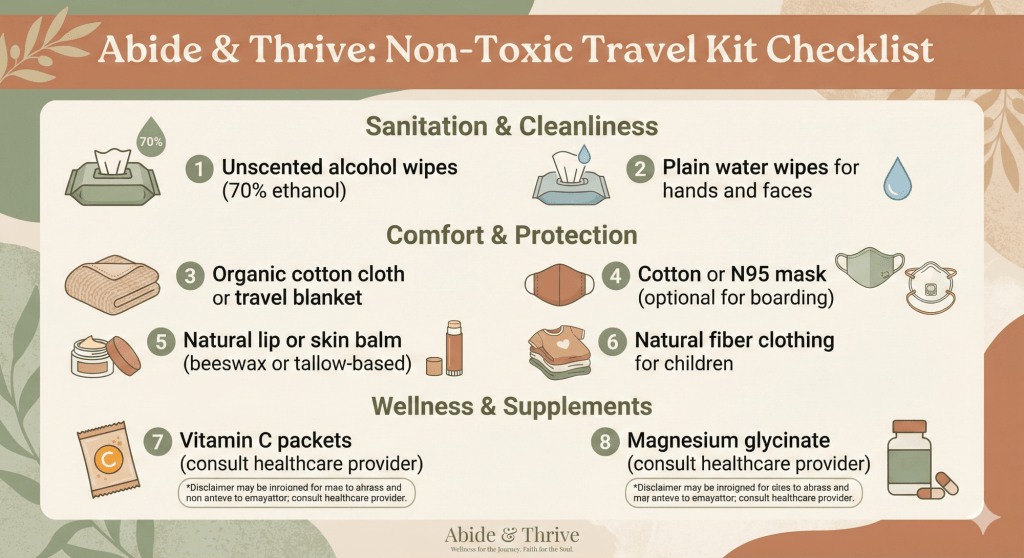
Plain water wipes for children’s hands and faces
Organic cotton cloth or swaddle to place between your body or child and the seat
Cotton scarfs or cloth mask for optional use during boarding if odors are strong
Natural lip or skin balm to support the skin barrier in dry, recycled cabin air
Gentle immune or mineral support such as vitamin C or magnesium, used under the guidance of a healthcare professional
Final Thoughts
Travel does not have to compromise health values. With calm awareness and thoughtful preparation, families can protect their well-being while honoring the responsibility to steward their bodies wisely.
At Abide and Thrive, we believe preparation brings peace, and peace allows us to move through the world with confidence and trust.
Wellness & Affiliate Disclosure
The information shared in this article is for educational and informational purposes only and is not intended to diagnose, treat, cure, or prevent any disease. Abide and Thrive does not provide medical advice and is not a substitute for professional medical guidance. Always consult a qualified healthcare provider before making changes to your health routine, especially for children, pregnancy, or existing medical conditions.
Some links in this post may be affiliate links. This means Abide and Thrive may earn a small commission at no additional cost to you if you choose to make a purchase through these links. We only recommend products that align with our values of faith, wellness, and intentional living.
 abide & thrive