
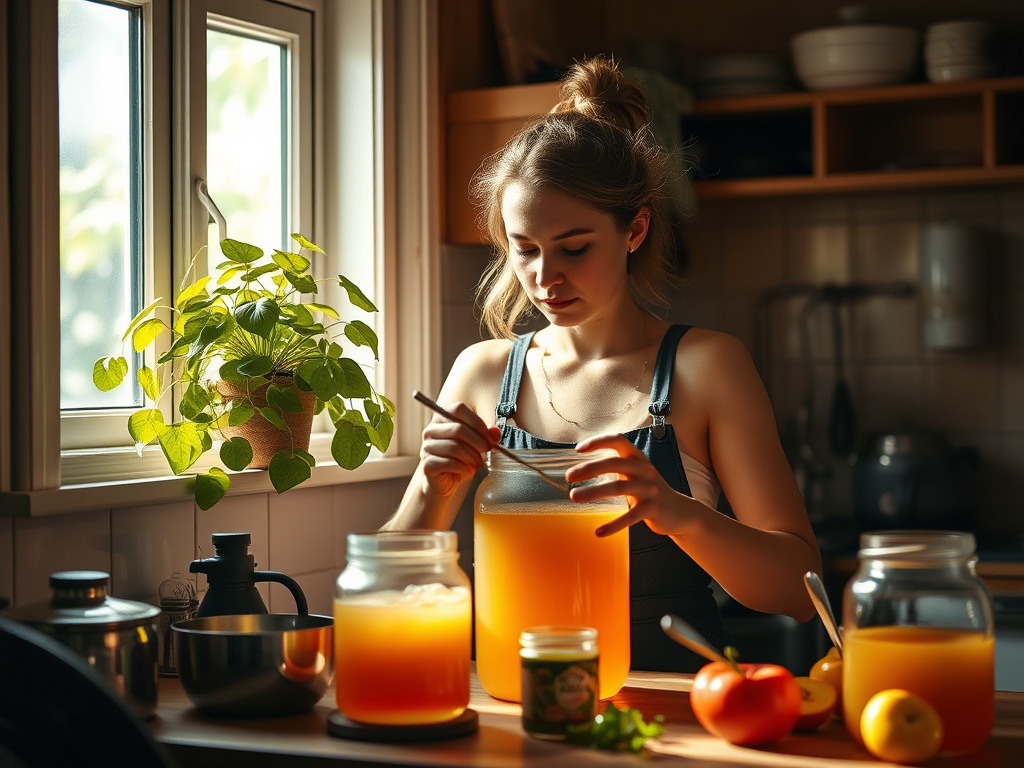
Kombucha has become a favorite drink among people seeking natural ways to support digestion and overall wellness. This lightly fizzy fermented tea has been enjoyed for centuries and is valued for its probiotics, antioxidants, and refreshing taste. Making kombucha at home is surprisingly simple and allows you to control the ingredients, sweetness, and flavor.
In this guide, we’ll explore what kombucha is, its potential health benefits, and how you can brew your own batch right in your kitchen.
What Is Kombucha?
Kombucha is a fermented tea made by combining sweetened tea with a living culture called a SCOBY (Symbiotic Culture of Bacteria and Yeast). During fermentation, the yeast and bacteria consume the sugar and transform the tea into a tangy, slightly carbonated beverage.
The drink has been traditionally consumed in parts of Asia for hundreds of years and is now popular worldwide for its probiotic properties and unique flavor.
Health Benefits of Kombucha
While kombucha is not a cure-all, it may offer several wellness benefits when enjoyed as part of a balanced lifestyle.
1. Supports Gut Health
Kombucha contains beneficial bacteria created during fermentation. These probiotics help support a healthy balance of microorganisms in the digestive system, which may aid digestion and support immune function.
A healthy gut microbiome is linked to improved digestion, nutrient absorption, and overall wellness.
2. Provides Antioxidants
Kombucha is typically brewed from green or black tea, both of which contain antioxidants. These compounds help combat oxidative stress in the body and support cellular health.
Green tea kombucha in particular contains polyphenols that are associated with anti-inflammatory effects.
3. May Support Detoxification
During fermentation, kombucha produces organic acids such as acetic acid and gluconic acid. These compounds may support the body’s natural detoxification processes, particularly those related to liver function.
4. May Promote Natural Energy
Kombucha contains small amounts of naturally occurring caffeine from tea and B vitamins produced during fermentation. These nutrients can provide a gentle energy lift without the crash that often comes with sugary drinks.
5. May Help Reduce Sugar Intake
Many commercial beverages contain large amounts of refined sugar. When brewed properly, kombucha uses much of the sugar during fermentation, leaving a beverage that can be significantly lower in sugar than soda or sweet tea. Use honey instead of sugar!
Ingredients Needed to Make Kombucha
Making kombucha requires only a few simple ingredients.
Ingredients
- 1 gallon filtered water
- 4–5 black or green tea bags
- 3/4 cup honey
- 1 SCOBY
- 2 cups starter tea (from a previous batch or store-bought plain kombucha)
Step-by-Step Homemade Kombucha Recipe
1. Brew the Tea
Bring the water to a boil. Remove from heat and add the tea bags. Allow the tea to steep for about 10 minutes.
2. Cool the Tea
Allow the sweet tea to cool to room temperature. This step is important because hot tea can damage the nutrients in the honey.
3. Add the Honey
Stir in the honey until dissolved.
4. Add the SCOBY and Starter Tea
Pour the cooled tea into a large glass jar. Add the starter tea and gently place the SCOBY on top.
5. Cover and Ferment
Cover the jar with a breathable cloth or coffee filter secured with a rubber band. This keeps dust out while allowing airflow.
Place the jar in a warm, dark area and allow it to ferment for 7–10 days.
6. Taste and Bottle
After about a week, taste the kombucha. If it has reached your preferred balance of sweet and tangy, remove the SCOBY and set aside with a cup of the kombucha for your next batch.
Pour the kombucha into bottles.
Optional Second Fermentation for Flavor
For additional fizz and flavor, you can perform a second fermentation.
Add ingredients such as:
- fresh ginger
- berries
- lemon slices
- mango
- herbs like mint or basil
Seal the bottles and allow them to sit at room temperature for 2–3 days before refrigerating.
Helpful Tips for Brewing Kombucha
- Always use glass containers for fermentation.
- Avoid metal containers, which can react with the acids.
- Keep everything clean to prevent contamination.
- Start tasting after about 7 days to find the flavor you like.
Is Kombucha Safe for Everyone?
Kombucha is generally safe for most healthy adults when consumed in moderation. However, because it contains small amounts of caffeine and trace alcohol from fermentation, some people may prefer to limit or avoid it.
Those who are pregnant, immunocompromised, or sensitive to fermented foods should consult a healthcare professional before consuming kombucha regularly.
Final Thoughts
Brewing kombucha at home is a rewarding and simple way to create a refreshing probiotic drink using just a few ingredients. Not only can it support digestive health, but it also allows you to enjoy a naturally fermented beverage without the additives often found in store-bought drinks.
With a little patience and creativity, you can experiment with flavors and develop your own signature kombucha blends.
 abide & thrive