Blog

  • Natural Flavors: Are We Really Eating What We Think We Are?

    Natural Flavors: Are We Really Eating What We Think We Are?

    Pick up a flavored yogurt, a sparkling water, or a granola bar marketed as healthy, and turn it over. Odds are good you’ll find two words near the end of the ingredient list: natural flavors.

    They sound harmless. If it’s natural, it’s probably fine. Maybe so, but the label doesn’t tell you much.

    Layne Kilpatrick’s October 3 article, “Natural Flavor: The Ingredient Nobody Has to Name,” lays out how little those two words reveal. It got us asking our own questions.

    What the term actually means

    Under FDA rules (21 CFR 101.22), a natural flavor has to start from a plant or animal source: fruit, vegetables, herbs, spices, roots, or fermentation. After that, it can be extracted, concentrated, heated and blended using a lot of food technology.

    So “natural strawberry flavor” doesn’t have to come from strawberries. Flavor chemists can build a strawberry taste from aromatic compounds taken from other plants, and it still counts as natural. That’s legal. It just isn’t what most of us picture.

    What the label leaves out

    One “natural flavor” on a label can stand for a blend of many compounds, and the exact recipe is usually a trade secret. Manufacturers are still responsible for safety, and regulators can ask for details. But you, standing in the aisle, can’t tell what’s in it from the package.

    If we’re trying to be careful about what goes into our bodies and our children’s bodies, that’s a fair thing to want to know.

    Natural isn’t the same as safe

    Plenty of natural substances cause harm at the wrong dose. Kilpatrick points to flavoring compounds that later raised real safety concerns, which is why safety has to be tested rather than assumed from a word on the box.

    In the US, many flavorings go through the GRAS (“generally recognized as safe”) pathway, and some GRAS decisions are made without the FDA reviewing them first. That has people debating transparency and independent oversight. To be fair, missing public data doesn’t prove an ingredient is dangerous. It does leave room for questions.

    Have we lost our taste for real food?

    Think about a strawberry picked that morning, fresh ginger, lemon balm, or a cup of chamomile. Those flavors are quieter than anything engineered to hit hard on the first bite. When most of what we eat is intensely flavored, simple food starts to taste flat. Taste adjusts, though. Eat more whole food for a few weeks and the quieter flavors come back.

    Five practical steps

    1. Read the back, not the front. “Natural,” “pure” and “made with real fruit” are marketing words.
    2. Favor short lists you understand, and remember a chemical-sounding name isn’t automatically bad.
    3. Flavor food yourself with citrus zest, cinnamon, fresh herbs, ginger and berries.
    4. Ask the brands you buy. Many will tell you what their natural flavors come from.
    5. Change one thing at a time. Pick one product you buy every week and look for a simpler swap.

    Where faith fits

    “Whether therefore ye eat, or drink, or whatsoever ye do, do all to the glory of God.” (1 Corinthians 10:31, KJV)

    We don’t read that as a call to fear every label. We read it as an invitation to pay attention, give thanks, and choose with care. Natural flavors aren’t automatically harmful. They just don’t tell the whole story. Next time you pick up something “naturally flavored,” turn it over and ask a question or two.

    Have you started checking labels for natural flavors? Tell us in the comments what surprised you.

    Further reading: Layne Kilpatrick, “Natural Flavor: The Ingredient Nobody Has to Name” (Oct 3, 2026) · FDA, 21 CFR 101.22 · FDA guidance on GRAS.
    This post is about label transparency. It isn’t medical advice and doesn’t claim that approved natural flavorings cause disease.

  • Calendula: The Golden Flower for Natural Skin Care

    Calendula: The Golden Flower for Natural Skin Care

    Calendula is the bright orange-and-gold flower many people know as pot marigold. It’s easy to grow, it blooms for months, and for generations people have soaked its petals in oil and turned them into salves for dry, chapped skin. Here’s what it is, where it helps, and how to make a simple infused oil at home.

    What calendula is

    Calendula (Calendula officinalis) belongs to the daisy family. Its flowers go into infused oils, salves, creams, teas and tinctures. They contain flavonoids, carotenoids and triterpenoids, plant compounds with antioxidant and soothing properties, which is a big reason calendula shows up in so many natural skin products. One note: the French and African marigolds sold for garden beds (Tagetes) are a different plant.

    Where it helps

    Calendula is used mostly on the skin. It’s a gentle choice for dry, rough, chapped or mildly irritated patches, and you’ll find it in balms, hand and body creams, lip balms, facial products, herbal oils and soap. For dry skin, look for calendula paired with olive oil, jojoba, shea butter, coconut oil or beeswax. If your skin is sensitive, choose fragrance-free.

    People have also put calendula on minor scrapes for a long time, and some research suggests it may support healing. The evidence isn’t strong enough to replace regular wound care, though. A deep, infected or serious wound, or a burn, needs a doctor.

    Growing your own

    Calendula does well in beds and containers and keeps flowering if you keep picking. If you plan to use it on your skin, grow it without synthetic pesticides or herbicides and be sure of the plant before you harvest. Dry the petals fully and store them in a jar for later.

    Simple calendula-infused oil

    You’ll need: dried calendula flowers, olive oil or another carrier oil, a clean, dry glass jar, a strainer or cheesecloth, and a clean bottle.

    Fill the jar loosely with dried flowers and pour in oil until they’re completely covered. Set it somewhere cool and dark and check it every few days. When it’s ready, strain out the flowers and bottle the oil. Use it as a body oil or as the base for a homemade balm.

    Use completely dry flowers and dry equipment, because moisture lets mold and bacteria grow. If the oil ever smells off, looks cloudy or grows anything, throw it out.

    Who should be careful

    Natural doesn’t mean risk-free. If you react to ragweed, chrysanthemums, daisies or marigolds, you may react to calendula too, so patch test a small spot first. If you’re pregnant, breastfeeding, taking medication, or thinking about taking calendula by mouth, check with your doctor before using it medicinally.

    A small gift from creation

    Calendula is a simple reminder of the good things God placed in creation for our care.

    “And God said, Behold, I have given you every herb bearing seed, which is upon the face of all the earth, and every tree, in the which is the fruit of a tree yielding seed; to you it shall be for meat.” (Genesis 1:29, KJV)

  • Eat Your Way to Healthier Skin: The Clean-Eating Glow

    Eat Your Way to Healthier Skin: The Clean-Eating Glow

    We spend a lot on what goes on our skin: cleansers, moisturizers, serums. Far less thought goes into what we eat, even though skin is built from it. Your skin needs nutrients to keep its barrier strong, make collagen, and handle everyday wear from sun and stress. Whole, colorful food is one of the simplest ways to give it those building blocks.

    Healthy fats

    Avocados bring monounsaturated fat and vitamin E, which support the skin barrier. Spread them on toast or blend half into a smoothie.

    Nuts and seeds such as almonds, walnuts, chia, flax and pumpkin seeds add healthy fat, vitamin E and minerals with almost no prep. Sprinkle ground flax on oatmeal or keep a handful of nuts for a snack.

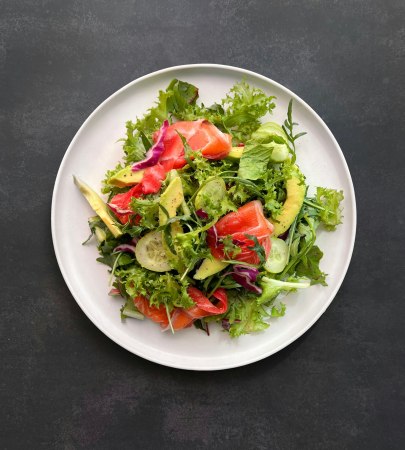
    Fatty fish like salmon, sardines and trout, for those who eat fish, provide omega-3s and protein. Grilled salmon on a salad with greens and avocado covers a lot in one meal.

    Color on the plate

    Berries are rich in antioxidants and vitamin C, which your body needs to make collagen. Add them to oatmeal, chia pudding or smoothies.

    Citrus such as oranges, grapefruit, lemons and limes adds more vitamin C. Squeeze lemon over vegetables or into your water.

    Orange and red vegetables like sweet potatoes, carrots, red peppers and pumpkin carry beta-carotene, which the body turns into vitamin A. Roast them with olive oil and herbs.

    Tomatoes give vitamin C and lycopene. Cooking them actually makes more lycopene available, so tomato soup and sauce count.

    Leafy greens such as spinach, kale and collards pack vitamins, minerals and carotenoids. Toss them in a salad or sauté with garlic and olive oil.

    Cruciferous vegetables like broccoli, cauliflower, cabbage and Brussels sprouts give plenty of nutrition and fiber for few calories. Roast a tray of them together.

    Protein

    Skin is mostly protein, so it needs amino acids to repair itself. Beans and lentils add plant protein along with fiber, iron and folate. Lentil soup, black bean tacos and chickpea salad are easy places to start.

    Water

    Water carries nutrients and keeps every system running. Make it your main drink, and if plain water bores you, add lemon, cucumber or a sprig of mint.

    What to eat less of

    Clean eating isn’t about perfection. It’s about letting whole, minimally processed food make up most of your plate. Cut back on sugary drinks, candy, highly processed snacks, refined baked goods, fast food and heavily processed meats. You don’t have to give up every treat. Consistency matters more.

    An easy plate to remember

    Fill half your plate with vegetables and fruit, a quarter with protein, and a quarter with whole-food carbs and healthy fat. For example: grilled salmon, roasted sweet potato, a spinach salad with avocado, and berries on the side.

    Your skin is part of your whole body

    Good skin care also means sleep, movement, managing stress, and protecting your skin from too much sun. Food isn’t a cure for acne, eczema or rosacea, which can have many causes and may need a professional’s help. But eating well every day gives your skin and the rest of you what they need to work well.

    “What? know ye not that your body is the temple of the Holy Ghost which is in you, which ye have of God, and ye are not your own?” (1 Corinthians 6:19, KJV)

  • Until We Meet Again

    Until We Meet Again

    The promise of Jesus and the hope of resurrection

    Some goodbyes feel impossible to say. We stand beside a hospital bed, sit in a room that suddenly feels empty, or gather at a graveside and wonder how life can go on without someone we love. In the quiet moments afterward, most of us have wished for just one more day with them.

    The Bible gives us something better than a memory. It gives us a promise that death’s separation isn’t forever, that Jesus is coming again, and that there will be a resurrection morning when God’s people are together again.

    “I will come again”

    The night before His crucifixion, Jesus knew His disciples were about to be crushed by grief. So He gave them a promise:

    “I will come again, and receive you unto myself; that where I am, there ye may be also.” (John 14:3, KJV)

    He pointed them, and us, toward the day He returns.

    A resurrection morning is coming

    Scripture describes death as a sleep that Jesus will wake His people from. When Lazarus died, Jesus told His disciples:

    “Our friend Lazarus sleepeth; but I go, that I may awake him out of sleep.” (John 11:11, KJV)

    Then He stood at the tomb and called Lazarus back to life. That miracle pointed to something larger, the resurrection itself. Jesus said:

    “I am the resurrection, and the life.” (John 11:25, KJV)

    Because He lives, death doesn’t get the last word.

    Listen for the trumpet

    Paul didn’t want believers to grieve without hope, and his letter to the Thessalonians is one of the most comforting passages for anyone who has lost someone:

    “For the Lord himself shall descend from heaven with a shout, with the voice of the archangel, and with the trump of God: and the dead in Christ shall rise first: Then we which are alive and remain shall be caught up together with them in the clouds, to meet the Lord in the air.” (1 Thessalonians 4:16–17, KJV)

    Picture that morning: graves opening, the dead in Christ rising, families and friends finding each other, and God’s children finally seeing the Savior they trusted by faith. Paul’s word for it is “together,” and it’s hard to think of a better one.

    It’s okay to grieve

    Some Christians feel their sadness means their faith is weak. Scripture says otherwise. Standing among the mourners at Lazarus’s tomb, “Jesus wept.” (John 11:35, KJV) If He wept, we don’t need to be ashamed of our tears. Faith doesn’t mean we stop missing the people we love. It means we don’t believe the separation is the end.

    The grave isn’t the end

    The world treats death as the final chapter. The gospel tells a different story. Jesus went into the grave, conquered death, and rose again, and because He lives we can look ahead to the resurrection.

    “For as in Adam all die, even so in Christ shall all be made alive.” (1 Corinthians 15:22, KJV)

    Imagine waking on that morning, hearing the trumpet, and recognizing a face and a voice you’ve missed for years. And above all of it, Jesus will be there: the One who promised to come back, who beat the grave, and who promised to wipe away every tear.

    “There shall be no more death”

    “And God shall wipe away all tears from their eyes; and there shall be no more death, neither sorrow, nor crying, neither shall there be any more pain: for the former things are passed away.” (Revelation 21:4, KJV)

    The very thing that separated us from the people we love will be gone. God’s plan isn’t only to help us endure death. His plan is to destroy it.

    Until then

    If you’re missing someone today, let yourself remember them. Then lift your eyes to Jesus, who said “I will come again.” Hold on to Him until that day, when the tears are wiped away and death is no more.

    A prayer for those who are grieving

    Dear Jesus, You know the pain of losing someone we love, and You know the tears we cry when we wish they were still here. Thank You for reminding us that death is not the end. Thank You for the promise of Your return and the hope of the resurrection. When our hearts are heavy, hold us close. When we feel alone, remind us that You are near. When we miss the people we love, help us look forward to the day You make all things new. Give us strength to keep walking with You until the trumpet sounds and You come to take Your children home. Come, Lord Jesus. Amen.

    Scripture to hold on to

    • John 14:3: “I will come again.”
    • John 11:25: “I am the resurrection, and the life.”
    • 1 Thessalonians 4:16: “The dead in Christ shall rise first.”
    • 1 Corinthians 15:52: “The dead shall be raised incorruptible.”
    • Revelation 21:4: “There shall be no more death, neither sorrow, nor crying.”
  • Lymphatic Glow-Up: Natural Ways to Keep Your Lymph Moving

    Lymphatic Glow-Up: Natural Ways to Keep Your Lymph Moving

    Your lymphatic system carries fluid, waste and immune cells around the body, but unlike your blood it has no heart to pump it. It moves when you move, breathe deeply and stay hydrated. You don’t need gadgets or expensive treatments to help it along. These are simple, low-cost habits that fit into an ordinary day.

    Breathe from your belly

    Slow, deep belly breathing creates pressure changes in the chest and abdomen that help lymph move. Breathe in through your nose and let your belly expand, pause briefly, then breathe out slowly. Five to ten minutes is plenty. Many people pair this with morning prayer.

    Move often, gently

    Regular movement does more than any single workout. Walking, swimming, easy cycling, yoga, stretching and dancing all count, and getting up often during the day matters more than intensity.

    Rebounding on a mini trampoline is popular in holistic circles because the bounce alternately squeezes and releases tissue. Start with very small bounces, or simply shift your weight from foot to foot.

    Stretching works joints and the muscles around them, which helps push lymph along. A simple morning set: neck rolls, shoulder circles, arm raises, torso twists, cat-cow, gentle squats, calf raises, then a 5 to 10 minute walk.

    If you sit for long stretches, stand up every so often and move your ankles, calves and arms. A few minutes of walking helps.

    Light self-massage and dry brushing

    Lymphatic self-massage uses very light, slow strokes, nothing like a deep-tissue massage. Lymph vessels sit just under the skin, so harder isn’t better. Work gently around the neck, collarbones, chest, belly, arms and legs.

    Dry brushing exfoliates and may briefly increase circulation, but claims that it “detoxes” the lymph aren’t well supported. If you enjoy it, use a soft brush and gentle strokes toward the center of your body.

    Water and food

    Lymph is mostly water, so staying hydrated supports normal fluid balance. Drink steadily through the day according to your thirst rather than forcing huge amounts.

    There’s no special “lymph detox diet.” An overall nourishing diet supports your immune system and heart: berries and colorful fruit, leafy greens, cruciferous vegetables, garlic and onions, ginger, turmeric, beans and lentils, nuts and seeds, avocado, whole grains and enough protein. Go easy on alcohol, highly processed food and excess salt.

    Rest

    Sleep, rest and lower stress all affect how your body manages fluid and fights illness. Consistent bedtimes, quiet time and prayer are part of a whole-person approach.

    “Come unto me, all ye that labour and are heavy laden, and I will give you rest.” (Matthew 11:28, KJV)

    What about herbs?

    Cleavers (Galium aparine), red clover, calendula and echinacea are often promoted for lymph support, but there’s little evidence they “cleanse” the lymph in healthy people. Be wary of products sold as a lymph detox, cleanse or flush. Herbs can interact with medications and aren’t right for everyone, especially during pregnancy.

    A simple daily routine

    • Morning: a glass of water, 5 minutes of belly breathing, 5 to 10 minutes of stretching, a 15 to 30 minute walk.
    • During the day: stand and move every hour or so, and keep drinking water.
    • Evening: gentle stretching, 5 minutes of deep breathing, and light self-massage if you like.

    When to see a doctor

    Don’t try to “flush” persistent swelling yourself, especially on one side of the body. The same goes for enlarged lymph nodes with no clear cause, significant pain, redness or warmth, sudden leg swelling, or shortness of breath. Those need a medical evaluation. If you’ve been diagnosed with lymphedema, a trained lymphedema therapist can show you safe manual drainage; aggressive massage isn’t right for everyone.

  • Make Your Own Vegan Protein Powder: Clean, Simple, and Customizable

    Make Your Own Vegan Protein Powder: Clean, Simple, and Customizable

    Walk down any supplement aisle and the tubs make big promises: 20 grams of protein, complete amino acids, zero fillers. Turn one around and the ingredient list often adds gums, artificial sweeteners, anti-caking agents and processing aids. Independent testing has also found measurable lead, arsenic and cadmium in some plant-based protein powders, usually picked up from the soil the crops grew in.

    You can make your own in about five minutes, from seeds you probably already trust.

    Why make your own

    You control every ingredient, you can tune the balance of protein, fiber and fat to your needs, and it costs much less than store-bought. It also tastes fresher than the chalky, oversweetened versions on the shelf.

    The building blocks

    Pea protein is the base of most plant blends. It’s gluten-free, dairy-free and free of the major allergens, with a solid amino acid profile and some iron. You can buy pea protein isolate, or grind dried split peas at home. Home-ground peas give you pea flour rather than a true isolate, since the protein isn’t separated from the fiber and starch. That’s not a flaw, just a more whole-food product.

    Hemp seeds are one of the few plant foods with all nine essential amino acids, plus omega-3 and omega-6 fats, magnesium, iron and zinc. Use shelled hemp seeds (hemp hearts); the shells are too tough to digest comfortably.

    Flaxseed is known for omega-3s and lignans. Grind it fresh rather than buying it pre-ground, because the oils go rancid quickly once exposed to air.

    Chia seeds add less protein than hemp but lots of fiber, and they thicken shakes nicely.

    Recipe: simple three-seed base

    • 1/2 cup shelled hemp seeds
    • 1/2 cup flaxseeds
    • 1/4 cup chia seeds

    Put the seeds in a dry, high-speed blender and pulse in short 10 to 15 second bursts, shaking the jar or scraping the sides between pulses. You want a fine, flour-like texture, about like almond flour. Blend too long and the oils release, and you’ll get paste instead of powder, so go slowly. Store it in an airtight jar; a wide-mouth mason jar makes scooping easy.

    Storage: because of the natural oils, this keeps about 2 weeks in a cool, dark pantry, up to 2 months in the fridge, or up to 6 months in the freezer. A triple batch in the freezer means you always have some.

    Want more protein per scoop?

    Stir in pea protein isolate for a big boost without changing the flavor much. Or toast chickpea flour in a dry pan until fragrant, which softens the raw bean taste, and blend it in. For a whole-food pea option, soak split peas overnight, rinse and dry them well, bake at 350°F for 35 to 40 minutes until golden, then grind.

    Sample high-protein blend (20+ grams per serving)

    • 1 cup green split peas, soaked overnight, rinsed, dried and roasted at 350°F for 35 to 40 minutes
    • 2 tablespoons flax meal
    • 2 tablespoons chia seeds
    • 1 tablespoon sunflower seeds

    Let the peas cool completely, blend everything together, then sift out any large pieces and blend them again.

    It’s a small thing, but making your own food staples is one way to take care of the body you’ve been given and know exactly what’s in it.

    “And God said, Behold, I have given you every herb bearing seed, which is upon the face of all the earth…” (Genesis 1:29, KJV)

  • Microplastics Are Everywhere: Here’s How to Cut Your Exposure

    Microplastics Are Everywhere: Here’s How to Cut Your Exposure

    Open your kitchen cabinets, then your fridge, then look at the water bottle on your desk. Plastic touches almost everything most of us eat and drink in a day, and research increasingly suggests that’s worth paying attention to.

    Microplastics are plastic particles smaller than 5 millimeters, down to fractions of a micron. Scientists have now found them in human blood, placental tissue, the gut, the lungs and even the brain, and there’s evidence they build up in tissue over time.

    What we know so far

    The honest answer is that the long-term health effects aren’t clear yet. Much of the evidence comes from animal and cell studies. Researchers have proposed ways microplastics could cause harm, including inflammation, oxidative stress, hormone disruption and changes in gut bacteria, but direct proof in people is still limited.

    Some human findings are hard to ignore. A 2024 study in the New England Journal of Medicine followed patients who had plaque removed from their neck arteries. Those whose plaque contained microplastics had a higher risk of heart attack, stroke or death over the next few years. Follow-up lab work is looking at how these particles get into blood vessel cells.

    You may have heard that the average person swallows a credit card’s worth of plastic a week. That figure comes from a 2019 estimate, and other researchers have argued it’s too high. Even so, the exposure is real and constant.

    Since we can’t say it’s catastrophic and can’t say it’s nothing, cutting the easy, avoidable exposures is a sensible, low-cost step. Here’s where to start.

    1. Drop plastic water bottles

    Bottled water is one of the biggest daily sources. Twisting the cap, squeezing the bottle and leaving it in a hot car all break the plastic down into what you drink. Switch to stainless steel or glass refilled with filtered tap water. It usually tastes better and saves a surprising amount of money over a year.

    2. Stop storing and heating food in plastic

    Heat speeds up shedding, so microwaving leftovers in plastic or pouring hot soup into a plastic tub is the worst case. Fatty and acidic foods like tomato sauce and dressing pull more out, even in the fridge. Store food in glass or ceramic, and always move it to glass or ceramic before microwaving. “Microwave safe” means the container won’t melt, not that it won’t shed particles.

    3. Eat less fast food

    Wrappers, cups and containers are often lined with plastic, and the food is handled with plastic gloves, tongs and surfaces along the way. Hot, greasy food against plastic is close to a worst case for leaching. Making it an occasional meal instead of a routine one cuts exposure and helps your health in plenty of other ways.

    4. Run a HEPA air purifier

    Microplastics aren’t only in food. Synthetic carpet, furniture, clothing and house dust shed fibers into the air, and indoor air often carries more than outdoor air. A HEPA purifier traps fine particles, including many of these fibers. Start with the bedroom, where you spend about a third of your life.

    5. Cook with stainless steel or cast iron

    Many nonstick pans use polymer coatings that wear down with scratches, high heat and age, shedding particles into food even when the damage is too small to see. Stainless steel and cast iron have no coating to lose, and cast iron can add a little dietary iron as a bonus.

    6. Use a wooden cutting board

    Every knife stroke on a plastic board shaves off tiny particles, and research has found that chopping vegetables on plastic can transfer a large number of them into the food. Wood or bamboo boards don’t shed plastic. Oil them now and then so they don’t crack.

    A reasonable way to think about it

    None of this gets you to zero. Microplastics are in the air, soil, water and food chain, including foods we think of as clean, like seafood and sea salt. The goal is to cut your biggest, most avoidable sources, especially where heat, acid and repeated contact with food are involved. Small swaps add up over years, and they cost little.

    For us, this is part of caring for the bodies and homes God has entrusted to us, without living in fear of every container.

    “And the LORD God took the man, and put him into the garden of Eden to dress it and to keep it.” (Genesis 2:15, KJV)

    If you’re worried about environmental exposure and have symptoms like ongoing fatigue, brain fog or unexplained inflammation, talk with your doctor rather than relying on lifestyle changes alone.
    Sources: Marfella et al., “Microplastics and Nanoplastics in Atheromas and Cardiovascular Events,” NEJM, March 2024 · WWF / University of Newcastle, “No Plastic in Nature” (2019) · Yadav et al., chopping boards as a source of microplastics, Environmental Science & Technology (2023).

  • Move Your Lymph: An Easy 10-Minute Routine

    Move Your Lymph: An Easy 10-Minute Routine

    Most of us know how blood moves: the heart pumps it. Your lymphatic system is a second network running alongside it, and it has no pump. It relies on your muscles, your breathing and gravity to keep fluid moving. When we sit for hours, breathe shallowly under stress and don’t drink enough, it slows down.

    What the lymphatic system does

    • Collects waste, dead cells and debris from your tissues and carries them away
    • Moves white blood cells that help your body fight infection
    • Returns extra fluid from your tissues to your bloodstream
    • Absorbs fats and fat-soluble vitamins from your gut

    When lymph moves sluggishly, some people notice puffiness, heaviness in the legs or a general “backed up” feeling. The good news is that it responds to simple movement. Rhythmic bouncing, swinging and twisting with big muscle groups and deep breathing seem to help most. Here are eight moves.

    1. Lymphatic hops

    Stand with feet hip-width apart and knees soft. Rise onto the balls of your feet and bounce gently, heels barely leaving the floor, arms loose. Keep it light and rhythmic for 2 to 3 minutes. A mini trampoline (rebounder) makes this easier on the joints.

    2. Body waves

    With knees slightly bent, push your hips forward and let a slow wave roll up through your belly, chest and neck, then reverse it. Arms hang loose. This moves the whole spine and trunk, where the body’s largest lymph vessel runs. Do 10 to 15 slow waves each way.

    3. Arm swings

    Your armpits hold large clusters of lymph nodes. Let both arms swing forward and back like pendulums, growing the swing gradually and letting your torso turn with it. After a minute or two, switch to swinging each arm across your body and out, like opening curtains.

    4. Dead arms

    Raise both arms in front of you, breathe in, and on the breath out let them drop completely limp. Raise them again and repeat 10 to 12 times, or start with arms overhead. Many people feel warmth or tingling in their hands afterward.

    5. Trunk twists

    Stand with arms out to the sides and rotate left and right, letting your arms wrap loosely around you and your heels lift a little. Keep it smooth and breathe with the rhythm. Do 20 to 30 each direction.

    6. Golf swings

    No club needed. Stand wider than your shoulders, clasp your hands, and slowly swing as if driving a golf ball: weight back, rotate through hips and trunk, follow through high with weight forward. Do 10 to 15 each side. It works the armpits, trunk and groin all at once.

    7. Marches

    The legs hold the most lymph and have the longest climb back up. March in place with knees as high as is comfortable, swinging the opposite arm each step, landing softly. Keep it up for 2 to 3 minutes.

    8. Body claps

    With cupped or flat hands, clap briskly up your body: feet, calves, thighs, hips, lower back, belly, chest (gently), then each arm from the hand toward the armpit. Firm enough to feel a vibration, not enough to sting. Use loose fists if that’s more comfortable. About 3 to 5 minutes.

    The 10-minute routine

    1. Lymphatic hops, 2 minutes
    2. Body waves, 1 minute
    3. Trunk twists, 1 to 2 minutes
    4. Arm swings, 1 minute, then 10 dead arms
    5. Marches, 2 minutes
    6. Golf swings, 10 to 15 each side
    7. Body claps, head to toe, 2 to 3 minutes

    Even a few of these most days can leave you feeling lighter and more energetic.

    Other habits that help

    Drink water steadily through the day. Practice slow belly breathing. Dry brush gently toward your heart before a shower if you enjoy it. Skip clothing that’s tight at the groin, armpits and neck.

    Our bodies were made to move. Ten minutes of bouncing, swinging and marching is a simple way to care for one.

    “I will praise thee; for I am fearfully and wonderfully made: marvellous are thy works; and that my soul knoweth right well.” (Psalm 139:14, KJV)

    If you have persistent or one-sided swelling, a diagnosed condition like lymphedema, or a heart or joint problem, check with your doctor before starting new exercise.

  • Beyond the Protein Shake: What Plants Can (and Can’t) Do for Your Amino Acids

    Beyond the Protein Shake: What Plants Can (and Can’t) Do for Your Amino Acids

    “Protein-packed.” “20g protein.” “Now with added protein.” You’ll find those labels on everything from cereal to bottled water. Somewhere along the way, protein became the nutrient everyone worries about, while the rest of the plate got less attention.

    Here’s what’s true, what’s myth, and where the real opportunity is.

    Myth: your body makes amino acids from fruits and greens

    This idea gets passed around in wellness circles. Your body does make some amino acids itself. These are called non-essential amino acids, and your liver builds them from other compounds in your metabolism, not directly from a salad.

    But there are nine essential amino acids your body can’t make at all: histidine, isoleucine, leucine, lysine, methionine, phenylalanine, threonine, tryptophan and valine. They have to come from food.

    Most fruits and vegetables aren’t big protein sources either. A cup of broccoli has about 2 to 3 grams; an apple has less than half a gram. They’re wonderful for fiber, vitamins, minerals and anti-inflammatory plant compounds. They just aren’t amino acid factories.

    The plants that do deliver

    Legumes such as lentils, chickpeas, black beans and soybeans often give 15 to 18 grams of protein per cooked cup, with a broad mix of amino acids.

    Nuts and seeds like almonds, pumpkin, hemp, chia and sunflower seeds pack protein into small portions, plus the healthy fats you need to absorb fat-soluble vitamins.

    Whole grains such as oats, farro and brown rice round things out, especially alongside legumes. Quinoa is one of the rare plant foods that’s a complete protein on its own.

    Soy foods like tofu, tempeh and edamame also provide all nine essential amino acids in useful amounts.

    You don’t need to carefully combine plant proteins at every meal; nutrition science has mostly moved past that idea. What matters is eating a variety across the day.

    So what’s the problem with all the protein focus?

    Most people already get enough. Survey data shows the majority of American adults meet or exceed their protein needs without trying. Bread, dairy, eggs, meat and snacks all add up.

    More isn’t always better. Your body can only use so much protein for repair and growth at a time. Beyond that, the extra is burned for energy or stored.

    Fiber gets pushed aside. This is the real cost. When every meal is built around protein, fiber quietly disappears, and more than 90% of American adults already fall short on it. Fiber feeds your gut bacteria, steadies blood sugar, supports heart health, keeps you full, and is linked to lower rates of chronic disease. The best sources (beans, whole grains, vegetables, fruit) are exactly the foods that get treated as side dishes.

    Plant proteins do more than one job. A cup of cooked lentils gives you about as much protein as a serving of meat, roughly half a day’s fiber, and plant compounds linked to lower inflammation. Calling them “not enough protein” misses most of what they offer.

    The takeaway

    Essential amino acids have to come from food. That’s biology, and no smoothie changes it. But the answer isn’t more shakes and protein bars. It’s variety: legumes, nuts, seeds, whole grains, and plenty of fruits and vegetables, not because produce makes your amino acids, but because it does dozens of other jobs your body needs.

    Sometimes the better advice isn’t “eat more protein.” It’s “eat more of everything else, too.”

    “In the midst of the street of it, and on either side of the river, was there the tree of life, which bare twelve manner of fruits, and yielded her fruit every month: and the leaves of the tree were for the healing of the nations.” (Revelation 22:2, KJV)

  • Herbs & Plants for Detox from Environmental Toxins & Heavy Metals

    Herbs & Plants for Detox from Environmental Toxins & Heavy Metals

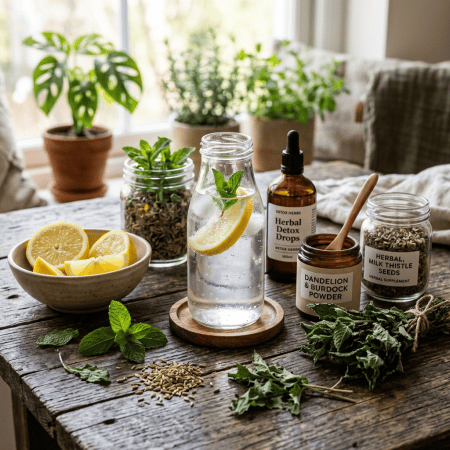
    Herbal detox drops, dandelion and burdock powder, milk thistle seeds, fresh mint, lemon slices, and herbs on a wooden table
    Herb/PlantDaily QuantityKey Action
    Cilantro (fresh)1/4 cup / ~15gMobilizes heavy metals from tissues; pairs with chlorella
    Chlorella (powder/tablet)3–5g (split doses)Binds and removes mercury, lead, cadmium in the gut
    Spirulina3–5gChelates arsenic; supports kidney during detox
    Wild blueberries1 cup / ~150gDraws out heavy metals from the brain and nervous system
    Atlantic dulse (seaweed)2 tbsp driedBinds mercury, lead, aluminum in the gut; does not re-release them
    Tamarind (pulp/paste)10–20g (about 1–2 tbsp)Research suggests it helps mobilize and excrete fluoride and lead via urine and feces; also supports liver enzyme activity

    A note on tamarind: It has been studied specifically for fluoride detoxification — a less commonly addressed environmental toxin found in tap water, some foods, and dental products. It works best consumed with meals (in chutneys, sauces, teas, or dissolved in warm water). Because it also mobilizes metals rather than binding them in the gut, pairing it with a binder like chlorella or psyllium husk is a smart move for the same reasons as cilantro.

    The rest of the protocol stays the same — tamarind slots in nicely alongside cilantro as a mobilizer.

    Liver Support & Phase I/II Detoxification

    Herb/PlantDaily QuantityKey Action
    Milk thistle (silymarin)200–400mg extract (70–80% silymarin)Protects and regenerates liver cells; boosts glutathione
    Dandelion root500mg–2g dried root or 1–2 cups teaStimulates bile production; supports liver & kidneys
    Burdock root2–4g dried root or 1–2 cups teaBlood purifier; supports lymphatic and liver drainage
    Turmeric500mg–1g curcumin extract (with black pepper)Reduces liver inflammation; upregulates detox enzymes
    Artichoke leaf300–600mg extractStimulates bile flow; protects liver from toxins

    Kidney & Urinary Drainage

    Herb/PlantDaily QuantityKey Action
    Nettle leaf300–500mg or 2–3 cups teaFlushes kidneys; rich in minerals lost during detox
    Parsley (fresh)2–3 tbsp / ~10gDiuretic; helps kidneys filter heavy metals
    Cleavers1–2 cups tea or 2–4ml tinctureSupports lymphatic drainage and kidney filtration

    Gut Binding & Intestinal Detox

    Herb/PlantDaily QuantityKey Action
    Activated charcoal500mg–1g (away from meals/meds by 2 hrs)Adsorbs toxins in the gut before absorption
    Psyllium husk5–10g with plenty of waterSweeps toxins and metals from the intestinal tract
    Bentonite clay1 tsp in water (away from meals)Adsorbs heavy metals and pesticides in the gut

    Antioxidant & Cellular Protection

    Herb/PlantDaily QuantityKey Action
    Green tea (EGCG)2–3 cups or 400–500mg extractChelates iron/copper excess; protects cells during metal mobilization
    Ginger root1–2g dried or 2–4 cups teaAnti-inflammatory; supports digestion and circulation during detox
    Garlic1–2 raw cloves or 600–1200mg aged extractContains allicin; natural chelator for lead and mercury
    Ashwagandha300–600mg extractReduces oxidative stress from toxin exposure

    Important Tips

    • Always take cilantro with chlorella — cilantro mobilizes metals; chlorella captures them so they exit rather than recirculate.
    • Hydrate well — aim for at least 8–10 cups of water daily to support kidney excretion.
    • Take binders (clay, charcoal, psyllium) away from medications and other supplements by at least 2 hours.
    • Go slow — starting a heavy detox too aggressively can cause retoxification symptoms (fatigue, headaches, brain fog). Build up gradually.
    • Consult a practitioner — especially if you have known heavy metal poisoning, kidney or liver disease, or are pregnant/nursing. Some of these (e.g., chlorella, bentonite clay) can interact with medications.

    This protocol is best approached as a 30–90 day lifestyle reset, not a quick cleanse. Rotating herbs every few weeks prevents tolerance and keeps detox pathways active.

    Psalm 104:14 He causeth the grass to grow for the cattle, and herb for the service of man: that he may bring forth food out of the earth;

    The information provided on abide & thrive is for general informational and educational purposes only. It is not intended as, nor should it be considered a substitute for, professional medical advice, diagnosis, or treatment.